The GTA 6 Merch Resale Market: What Collectors Pay and What Flops
Grand Theft Auto VI is currently scheduled for November 19, 2026, and the merchandise is already big business. T-shirts, figurines, posters, and collector’s items are selling before the game is even out — and a resale market is growing alongside them, where the same items change hands for two or three times their original price, or for less than they cost new. The gta 6 merch resale market is exciting, but it is also easy to lose money in. This guide explains what actually resells, what does not, and how to buy and sell GTA 6 merchandise without getting burned.
Why GTA 6 Merch Resells at All
Merchandise resells when three things are true: the item is limited, the demand is real, and the supply is fixed. GTA 6 has all three in unusual amounts. The game is the most anticipated launch in years, with a fan base that has waited more than a decade. Rockstar’s official merchandise is produced in limited runs. And once a run sells out, the only way to get an item is to buy it from someone who already has one — at whatever price they ask.
That dynamic is not new. GTA 5 merchandise from 2013 still sells on the resale market today, and limited items from that era — special edition figures, launch posters, and promotional items that were never sold in stores — command real prices. The lesson for GTA 6 is that the items most likely to hold value are the ones that are genuinely scarce, officially produced, and tied to a specific moment, like the launch itself.
But scarcity alone is not enough. A limited item that nobody wants is still worthless. The items that resell are the ones collectors actually want: high-quality figures, well-made apparel with designs people like, and items connected to the game’s characters, Lucia and Jason, or to the world of Leonida and Vice City. Generic items with a small logo slapped on a cheap shirt do not hold value, however limited they are. Our guide to GTA 6 merchandise worth buying covers the buying side — which items are worth owning in the first place — and the resale market rewards exactly the same judgement.
What Holds Value — and What Does Not
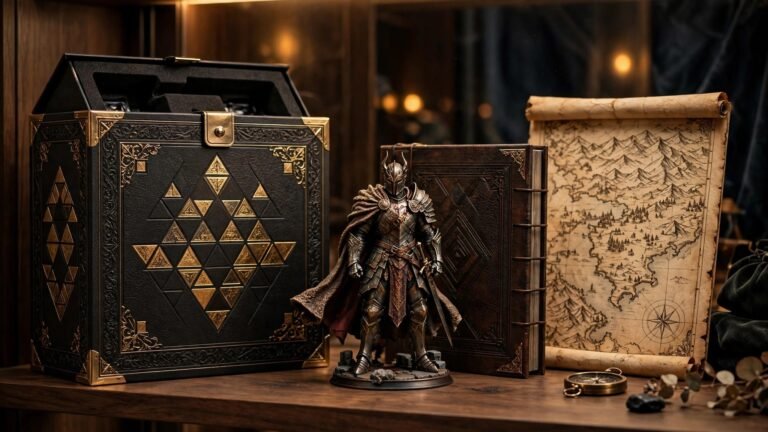
Collector’s edition contents are the most reliable resale category. The contents of special and collector’s editions — figures, art books, maps, steelbook cases — are produced in limited numbers and are wanted by collectors who missed the edition itself. A complete collector’s edition, unopened, typically holds its value best, and individual items from it can sell separately for good prices. But the key word is complete: an opened edition with pieces missing is worth far less than a sealed one, and a figure without its box is worth far less than one with it. If you are buying to resell, keep everything, including the packaging.
Limited apparel can hold value, but only when it is genuinely limited and well made. A launch-day shirt from Rockstar’s official store, produced in a numbered run, can resell for more than its original price. A mass-produced shirt from a general retailer cannot, because it is never scarce. The test is simple: if anyone can still buy it new, it will not resell for more than the new price.
Posters, art prints, and promotional items are a mixed category. Official art prints, especially numbered or signed ones, can hold value well. Free promotional posters from a store launch, on the other hand, are common and rarely worth much — though a poster from the actual launch event, kept in good condition, can surprise you years later. Condition is everything: a creased, faded, or sun-damaged poster is worth nothing, however rare it is.
What almost never holds value is unofficial merchandise. Unlicensed shirts, figures, and accessories flood online marketplaces around every big launch. They are often poor quality, they may infringe Rockstar’s trademarks, and they have no collector value because they were never scarce and never official. They are also the category most likely to be counterfeit. Buy official, or do not buy at all.
How to Buy Merch for Resale Without Losing Money
The first rule of buying merchandise to resell is to buy it because you like it, not only because you think it will go up in value. The resale market is unpredictable, and an item that looks like a sure thing can flop. If you like the item, the worst outcome is that you own something you enjoy. If you bought it purely as an investment, the worst outcome is a loss — and most merchandise bought as an investment does lose money.
The second rule is to buy at the official price, from the official source, on day one. The resale premium exists because the item sold out. If you pay a reseller’s price to begin with, you have already given away the profit. Set alerts for official store restocks, buy when the item is available, and never pay a markup for something that is still in stock somewhere else.
The third rule is to keep it sealed and complete. Collectors pay for condition. An unopened figure in a mint box is worth more than an opened one. A shirt with its tags still on is worth more than one that has been worn. Store items somewhere cool, dry, and out of sunlight, and keep the receipt and any certificate of authenticity. These small habits are the difference between an item that holds value and one that does not.
The fourth rule is to know your costs before you sell. Marketplace fees, payment processing fees, and shipping can take 15 to 25 percent of the sale price. An item that sells for $100 may leave you with $75 after fees. If you paid $60 for it, your profit is $15, not $40. Do the arithmetic before you list anything, and price accordingly.
How to Sell — and How to Avoid Getting Scammed
When you sell, use a platform with seller protection, take clear photographs of the item and its packaging, and describe the condition honestly. A listing that says “mint, unopened, with original box” will sell faster and for more than a vague listing with one blurry photo. Be honest about flaws: a buyer who discovers damage you did not mention will return the item, leave a bad rating, and cost you more than the honest description would have.
Watch out for the scams that target sellers as well as buyers. The most common is the fake buyer who offers to pay more than the asking price, or who asks you to ship the item before payment clears, or who asks you to complete the sale outside the platform where you have no protection. Never ship before payment is confirmed in your account, never accept a payment method you do not understand, and never move a transaction off the platform — the platform’s protection is the only thing standing between you and a loss.
Also beware of counterfeits when you are buying to resell. If you buy a fake, you cannot sell it as genuine, and selling it as genuine is fraud. Check the item against official photographs, look for quality differences in the printing, stitching, and packaging, and buy from official sources whenever you can. A bargain that turns out to be a fake is not a bargain at all.
The collector’s edition is a special case worth mentioning separately. Our guide to whether the GTA 6 collector’s edition is worth it looks at the edition from the buyer’s side — and the same logic applies to resale. An unopened collector’s edition is the single most reliable resale item in the whole GTA 6 merchandise market, but only if you can buy it at the official price and keep it sealed.
Frequently Asked Questions
Does GTA 6 merchandise hold its resale value?
Some of it does. Limited, official, unopened items — especially collector’s edition contents and numbered runs — can hold or increase in value. Mass-produced and unofficial items usually lose value. Condition and completeness matter as much as the item itself.
What GTA 6 merch is best for resale?
Unopened collector’s edition contents, limited official figures, and numbered apparel runs are the strongest categories. Buy them at the official price from official sources on day one, keep them sealed and complete, and store them properly.
Where should I sell GTA 6 merchandise?
Use a marketplace with buyer and seller protection, such as eBay or a similar platform, and take clear photos with an honest condition description. Avoid selling outside the platform or shipping before payment clears. Remember that fees and shipping can take 15 to 25 percent of the sale price.
How do I spot fake GTA 6 merchandise?
Buy from official sources whenever possible. Check the item against official photographs, look at the quality of printing, stitching and packaging, and be suspicious of prices far below the official price. Unofficial and unlicensed items have no collector value and may be counterfeit.
Conclusion
The GTA 6 merch resale market rewards patience, judgement, and honesty. Buy official items at the official price, keep them sealed and complete, and sell them on a protected platform with a clear description. That is the whole strategy — and it is enough, because most people in this market do the opposite: they buy unofficial items at inflated prices, open them, damage them, and then wonder why nobody wants them.
Buy what you like, keep it in good condition, and let the resale value be a bonus, not the plan. If the item goes up, you win. If it does not, you still own something you enjoy — and that is a better outcome than most investments in this market ever deliver.
Disclaimer: This article is for general educational purposes only and is not financial advice. It is not a recommendation to buy or sell any security. Consider your own financial situation or speak to a qualified adviser before making investment decisions.